Nine and a Half Miles Indoors: The Skyway System Gears Up for Winter
The enclosed bridges linking 80 downtown blocks are about to become the city's real street level. Their quirks — private owners, uneven hours, a maze logic all their own — are part of the deal.
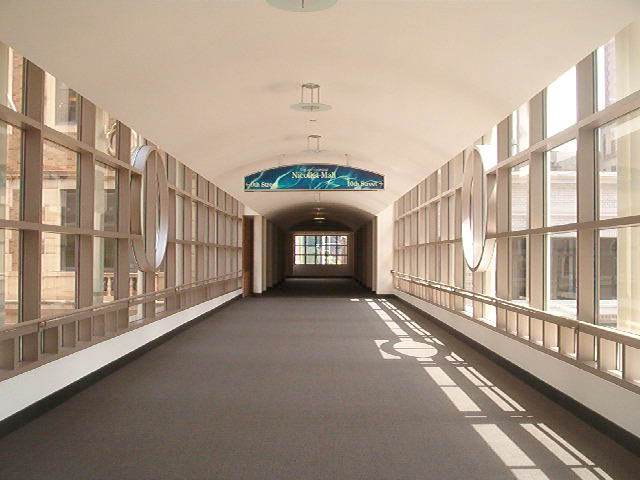
There are two downtowns in Minneapolis, and November is when the population migrates from one to the other. The street-level city of sidewalks and bus stops gives way, as the cold settles in, to the second city one floor up: the Minneapolis Skyway System, 9.5 miles of enclosed pedestrian bridges linking some 80 full city blocks in climate-controlled comfort.
The system, begun in the early 1960s by developer Leslie Park and architect Edward Baker, grew building by building into the longest continuous skyway network of its kind — connecting office towers, hotels, the Nicollet Mall shopping district, parking ramps, and the sports buildings at Target Center, Target Field and U.S. Bank Stadium. On a January weekday, a downtown worker can plausibly arrive by bus, work, eat lunch, see a dentist, watch a game and leave without once putting on a coat.
The system's charms come with its famous fine print. The skyways are owned by the individual buildings they connect, not by the city, which means there is no single map with final authority and no uniform schedule: most segments open early on weekdays and close in the evening, hours shrink on weekends, and a route that worked at noon may dead-end at a locked door at nine. Regulars navigate by landmarks and memory, and every downtown office has someone who serves as the informal skyway guide for new hires.
Critics have argued for decades that the skyways drain life from the sidewalks below, and the debate flares up whenever a segment's hours are cut. Defenders answer with the thermometer: the system was built for a city where winter is not a season but a condition, and it keeps downtown's office economy walkable through months that would otherwise empty it.
With the cold season arriving, the annual migration is underway. Learn your building's doors, learn which bridges run late on game nights, and forgive the maze its logic. By February, the skyway is not an amenity. It is the city.