Hiawatha Avenue Is Two Roads at Once
Highway 55 carries the cars; the Blue Line carries the people who gave up on it. The corridor between downtown and the airport is Minneapolis's daily referendum on how to move.
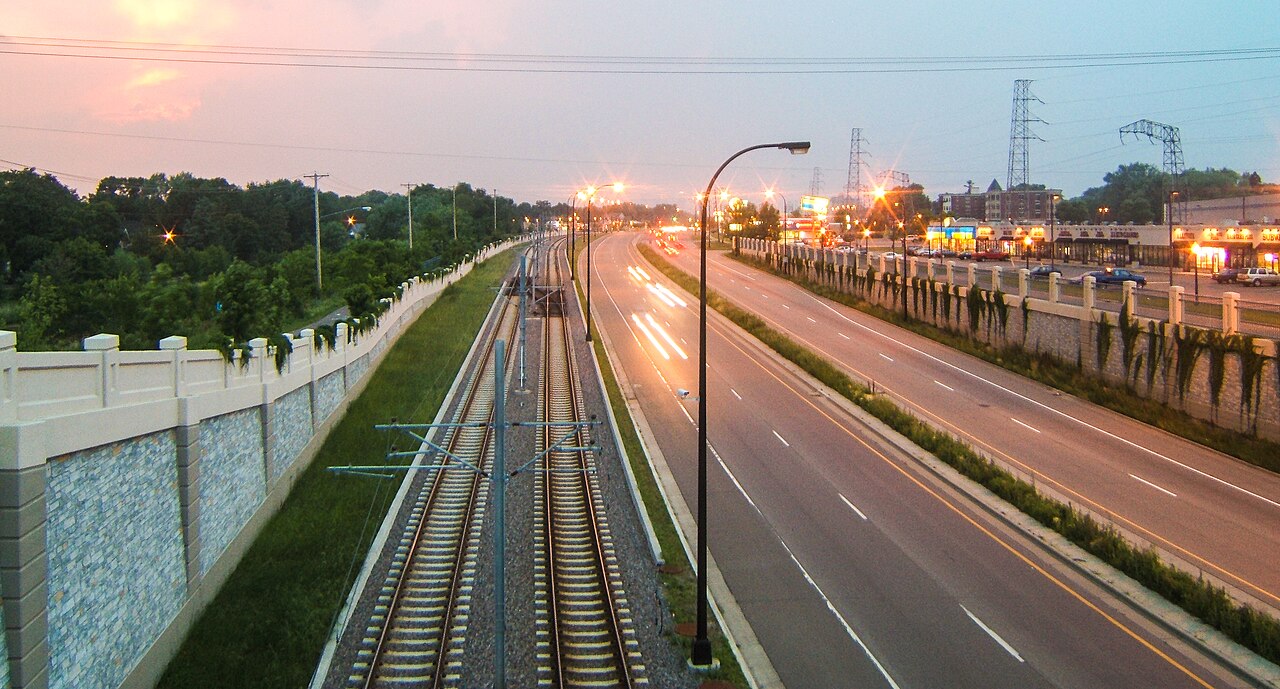
Hiawatha Avenue runs southeast out of downtown Minneapolis like a ruled line: Highway 55 on the pavement, the Metro Blue Line on rails beside it, and between them a fence's width of difference in how the trip feels at 8 a.m. The corridor connects downtown to the airport and the Mall of America, and it is the most honest transportation document in the city — two answers to the same question, running side by side, on the clock.
The road's frustrations are geometric. Hiawatha's at-grade intersections with the cross streets of south Minneapolis — Lake Street, 38th, 42nd, 46th, Minnehaha Parkway — meter the flow with traffic lights, so the avenue moves in pulses. Add a Twins game's worth of airport traffic, a snow squall or a stalled car at the wrong light, and the pulses stop. Drivers who know the corridor by heart plan their lives around its moods and keep Crosstown Highway 62 in reserve for the worst of them.
The train's argument is consistency. Blue Line trains run the same corridor on their own right-of-way for most of the route, stopping at the stations the avenue's drivers pass — Franklin Avenue, Lake Street/Midtown, 38th Street, 46th Street, Minnehaha Park, the VA Medical Center, Fort Snelling and the two airport terminals — on headways that do not care about the weather's mood until the weather becomes truly serious. The line, opened in 2004 as Minnesota's first modern light rail, turned an old railroad and streetcar corridor back into transit's main street.
The corridor is also where Minneapolis is growing. Station-area development along Hiawatha — apartments and retail at Lake Street and the 46th and 50th street nodes — keeps adding residents whose commute begins with a platform rather than a driveway, which is the region's long-range transportation plan made visible one building at a time. Every new household on the avenue slightly rewrites the corridor's referendum.
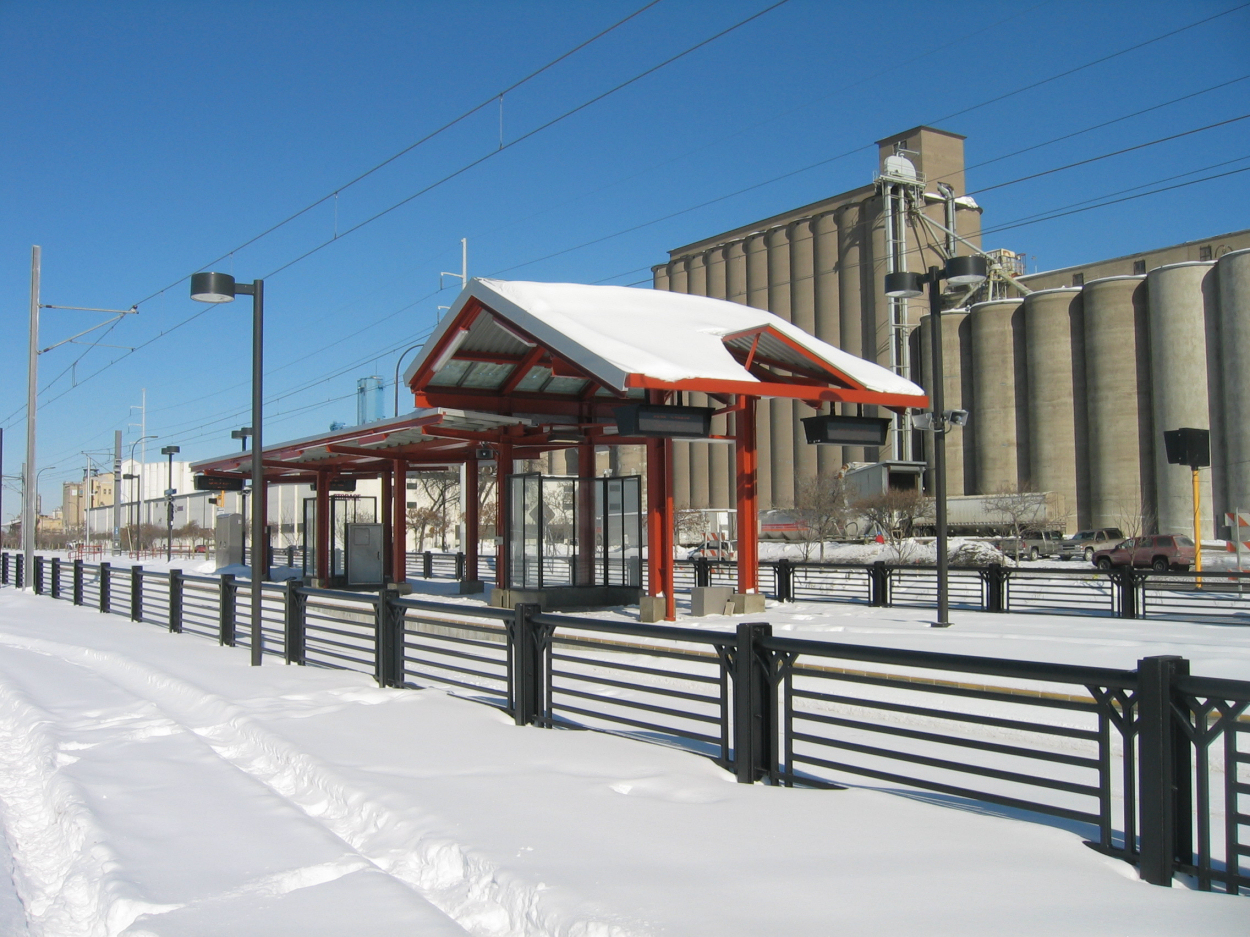
November adds the season's variable: the first snow will slow the avenue and barely touch the rails, and the corridor's daily vote will swing accordingly. It always comes back. Two roads, one destination — Minneapolis keeps both, and keeps score.